Views: 0 Author: Site Editor Publish Time: 2026-07-18 Origin: Site


Selecting a fluid-handling manufacturing partner involves high operational stakes. You need a perfect balance between technical precision and supply chain reliability. Off-the-shelf solutions often fail when faced with high-viscosity, shear-sensitive, or physically constrained applications. These rigid catalog designs cannot adapt to complex industrial environments. Sourcing equipment from a reliable partner requires looking far past basic spec sheets. You must critically evaluate their underlying engineering infrastructure and testing rigor. This article provides a clear, engineering-focused framework for evaluating a coupling screw centrifugal pump manufacturer accurately. We will focus strictly on custom capabilities, quality assurance protocols, and long-term lifecycle support. You will learn exactly how to verify engineering depth. Furthermore, we will show you how to align physical configurations with your specific fluid dynamics, ensuring maximum operational stability.
Engineering Alignment: A true OEM partner provides computational fluid dynamics (CFD) analysis and prototyping, not just catalog re-labeling.
Configuration Matching: Specifying between a coupling pump, horizontal pump, or spiral pump requires matching specific impeller geometries to fluid profiles and spatial constraints.
Verification is Non-Negotiable: Reliable manufacturers validate custom designs through documented Factory Acceptance Testing (FAT), including vibration, Net Positive Suction Head (NPSH), and alignment tolerances.
Lifecycle Stability: The right partner mitigates operational risks by ensuring localized spare parts availability and maintaining strict material traceability.
Assessing engineering depth separates genuine creators from mere assemblers. True manufacturers operate in-house foundries. They maintain advanced CNC machining centers and run dedicated R&D laboratories. Assemblers simply bolt pre-made, outsourced parts together. They often lack control over the core metallurgy. When you evaluate an OEM pump manufacturer, you must request their facility equipment list. You need a partner who tightly controls casting quality and structural tolerances internally.
Protecting intellectual property matters immensely during collaborative projects. Co-engineering proprietary fluid systems requires strict legal frameworks. Standard Non-Disclosure Agreements (NDAs) provide the first line of defense. However, true collaboration demands seamless CAD/CAM integration. Advanced manufacturers import your 3D piping models directly into their workflow. This shared digital environment prevents dimensional clashes early. It keeps proprietary blueprints secure within closed digital vaults.
Scalability presents another significant hurdle for engineering teams. You must manage Minimum Order Quantities (MOQs) carefully to avoid budget overruns. Capable manufacturers bridge the gap between initial prototypes and full-scale runs seamlessly. They do not bottleneck agile product development with rigid volume requirements. Instead, they allocate foundry time efficiently for small batches. They scale production up only when field testing validates the initial hydraulic design.
Selecting the right physical layout determines long-term operational uptime. A coupling pump offers significant operational benefits during extreme heavy-duty cycles. Engineers must choose wisely between flexible and rigid couplings. Flexible options isolate motor vibration highly efficiently. They absorb shock loads gracefully. They handle minor shaft misalignment without destroying internal bearings. Conversely, rigid couplings suit specific applications needing exact, continuous torque transfer. You must align these coupling traits with your expected operational stress levels.
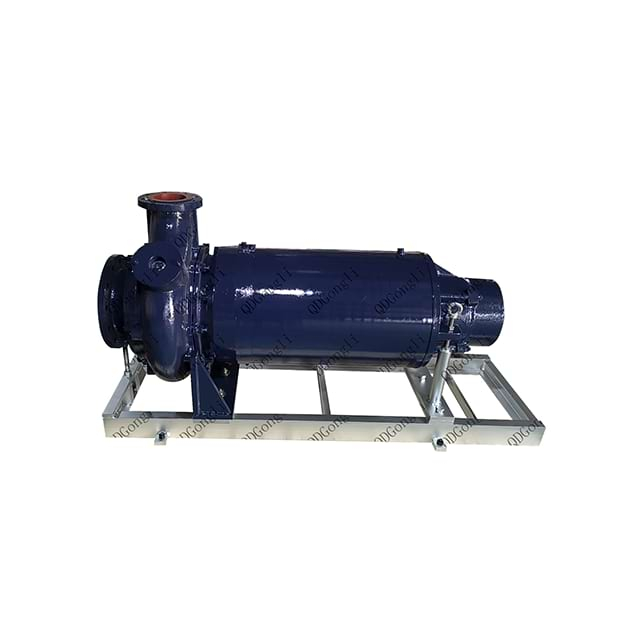
Physical space constraints often dictate the entire system design. Integrating a horizontal pump quickly solves severe vertical clearance issues. It provides far easier maintenance access for plant technicians. Operators can reach mechanical seals easily. They do not need to remove the massive overhead motor to perform routine checks. Horizontal orientations also provide structural necessity for specific piping alignments. They distribute heavy piping loads much more evenly across the reinforced baseplate.
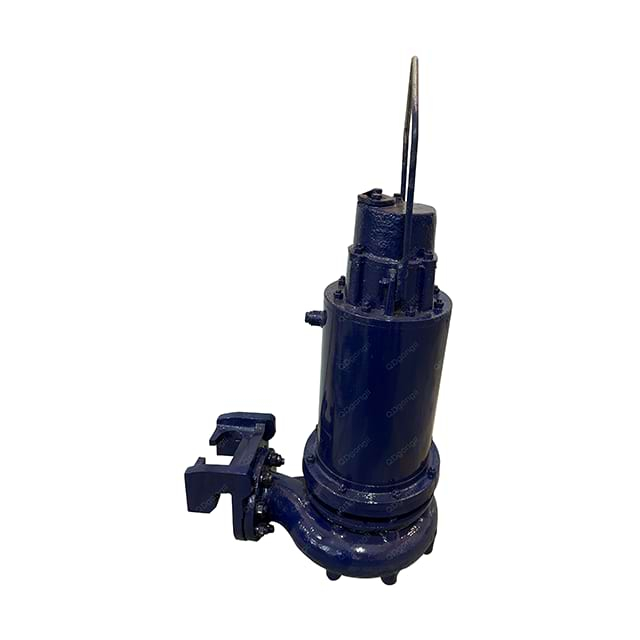
Impeller geometry ultimately defines fluid handling success. A single-channel spiral pump excels at conveying delicate solids. Food processing facilities rely on them heavily to prevent sheer damage to products. The screw centrifugal impeller handles stringy, highly abrasive wastewater effortlessly. It resists catastrophic clogging where standard centrifugal impellers fail immediately. This geometric advantage ensures continuous flow without costly manual clean-outs.

Translating a concept into metal requires exact material selection. Application-specific materials dictate overall equipment longevity. Duplex stainless steel resists harsh chemical attacks effectively. Standard grades simply cannot survive high-chloride environments. Specialized elastomers protect mechanical seals against severe abrasive wear. You must match these materials to exact chemical compatibility charts. Misjudging material resilience leads to rapid catastrophic failure.
Prototyping a custom pump involves intense iterative design phases. Engineers use advanced computational fluid dynamics (CFD). These high-level simulations predict complex flow patterns accurately. They reveal internal turbulence zones before manufacturing begins. Optimization reduces internal fluid shear significantly. CFD testing improves overall hydraulic efficiency drastically. It saves weeks of expensive trial-and-error physical casting.
Dimensional accuracy prevents unexpected mechanical breakdowns. Strict ISO/DIN machining tolerances remain completely non-negotiable. Tight tolerances prevent premature bearing wear. They ensure mechanical seal integrity under high-pressure loads. When designing custom dimensional layouts, precision machining guarantees that rotating assemblies maintain perfect concentricity.
| Component Category | Standard Material | High-Wear Alternative | Primary Application Environment |
|---|---|---|---|
| Impeller | 316 Stainless Steel | Duplex / Super Duplex | Corrosive chemical slurries |
| Volute Casing | Cast Iron | High-Chrome Alloy | Abrasive mining wastewater |
| Mechanical Seals | Carbon / Ceramic | Silicon Carbide / Tungsten | High-friction, particulate-heavy fluids |
| O-Rings & Gaskets | Standard Nitrile (Buna-N) | Viton or Kalrez | High-temperature solvent processing |
Verification guarantees flawless field performance. Credible manufacturing partners mandate rigorous Factory Acceptance Testing (FAT). You should never bypass these core protocols. Relying merely on design theoreticals introduces unacceptable operational risks.
Here are the primary testing procedures you must demand from your manufacturer:
Hydrostatic Pressure Testing: Exposing the sealed casing to 1.5 times its maximum design pressure confirms fundamental structural integrity.
Dynamic Balancing: Trimming the impeller mass exactly prevents destructive operational harmonics during high-speed rotation.
Flow-Curve Generation: Mapping head pressure against the flow rate verifies the original CFD predictions physically.
NPSH Validation: Confirming Net Positive Suction Head requirements ensures the system will not experience damaging cavitation.
Continuous monitoring during testing indicates mechanical stability. Vibration analysis identifies shaft deflection early. Technicians place sensors across the bearing housing. Thermal analysis flags excessive bearing friction before the unit ships. These metrics prove the assembly quality.
Material traceability matters deeply in highly regulated sectors. You must demand EN 10204 3.1 material certificates. These legal documents guarantee the exact chemical composition of all wetted parts. Sanitary and highly corrosive environments require this strict documentation. It provides a robust safety net for your engineering compliance team.
Custom builds often create future maintenance nightmares inadvertently. Unique bespoke parts take months to replace. Top-tier manufacturers solve this problem through smart component standardization. They design custom volutes and proprietary impellers for performance. However, they integrate standard, globally available mechanical seals into the stuffing box. They use universal ANSI/DIN bearing sizes. This hybrid design approach prevents future maintenance bottlenecks entirely. Your local plant technicians can source standard wear parts easily.
You must evaluate a supplier’s inventory management carefully. Supply chain disruptions halt production lines without warning.
Assess their capacity to handle global raw material shortages gracefully.
Check if they maintain dedicated buffer stock for your critical custom castings.
Review their historical lead times during past market disruptions.
Confirm they cast spare impellers simultaneously alongside your primary order.
Post-installation support defines long-term operational success. Evaluate the manufacturer's remote troubleshooting framework. Clarify their warranty processing speed under contract. Ensure they actively supply retrofit kits for evolving operational needs. True OEM partners adapt the equipment as your daily process parameters change.
Choosing the right manufacturing partner serves as a direct extension of your own engineering team. It reinforces your overall supply chain reliability. Off-the-shelf equipment rarely survives extreme fluid-handling demands. Standard models break down when facing high viscosity or sheer sensitivity. Custom engineering guarantees superior operational stability. However, this success requires strict validation through rigorous factory testing and transparent material certification.
Consider these actionable next steps to move forward:
Submit a comprehensive fluid data sheet for preliminary engineering analysis.
Request detailed past case studies featuring similar bespoke equipment builds.
Schedule an on-site or detailed virtual audit of the partner's testing facility.
Verify their global component standardization practices to secure your future maintenance pipelines.
A: Lead times generally range from 12 to 24 weeks. The timeline depends heavily on initial CAD approval and foundry availability. Physical prototyping and CFD iterations take roughly 4 to 6 weeks. Final casting, precision machining, and comprehensive FAT protocols add another 8 to 18 weeks. Prompt communication accelerates the initial design phase.
A: Reputable manufacturers enforce strict legal and operational firewalls. They execute robust Non-Disclosure Agreements (NDAs) upfront. Furthermore, they grant you exclusive mold ownership. This ensures they cannot reuse your specific volute or impeller castings for other commercial clients. Secure digital vaults protect your shared CAD files from internal leaks.
A: Yes, retrofitting remains possible, but requires highly precise engineering. The primary focus involves volute casing compatibility. The internal clearance must perfectly accommodate the new single-channel geometry. Additionally, you must re-evaluate motor sizing. Spiral impellers alter the torque curve significantly, potentially requiring a higher-rated motor.
A: You must demand an extensive documentation package. Essential items include detailed predicted performance curves and certified dimensional drawings. Require EN 10204 3.1 material certificates for all wetted components. Obtain documented FAT protocols outlining specific vibration and pressure thresholds. Finally, secure explicit warranty terms covering both design and manufacturing defects.