


Views: 0 Author: Site Editor Publish Time: 2026-03-03 Origin: Site


Choosing the right pump is rarely about picking the “biggest” model or matching a single flow number. In real projects, the pump you choose determines operational stability, energy cost, maintenance frequency, and whether your system runs smoothly or becomes a constant troubleshooting task. This is especially true when buyers are considering an Axial Flow Screw Centrifugal Pump—a pump concept often selected when you need high flow, stable conveyance, and a smoother handling of challenging media compared with standard solutions.
At Qingdao Gongli Technology Co., Ltd., we support customers who are sizing and specifying pumps for industrial transfer, circulation, process lines, and water-related applications where reliability and efficiency matter. In our experience, the best results come from a structured selection process: define the duty point correctly, understand the medium, evaluate NPSH and installation conditions, and confirm materials and sealing for your operating environment.
Different industries describe pump designs in different ways, so it helps to clarify the “why” behind this category.
An axial flow screw centrifugal pump is typically selected when the application requires:
relatively high flow with moderate head requirements
stable conveyance with less turbulence than some conventional designs
more forgiving performance in systems where flow conditions vary
improved handling behavior for certain fluids compared with standard pumps (application-dependent)
In many projects, buyers consider this type of pump when they want continuous, smooth transfer and practical efficiency across a working range—not only at a single peak point.
Before comparing pump models, lock down two numbers:
Required flow rate (Q)
Total dynamic head (H)
Define the real flow range, not only the average:
normal flow
peak flow
minimum flow (if control valves or variable speed will be used)
Total dynamic head includes more than elevation:
static lift
pipeline friction losses
valve and fitting losses
filter losses (clean vs dirty condition)
pressure requirements at discharge (if any)
Buyer tip: Many “undersized pump” problems happen because friction losses were estimated too low, or future line expansions were not considered.
Pump selection changes dramatically depending on the fluid. Clarify:
Fluid type (water, process liquid, slurry-like mixture, etc.)
Temperature range
Viscosity
Solids content (if any)
Corrosiveness
Presence of gas or entrained air
Even if two applications have the same flow and head, the pump design and materials can differ due to:
wear risk from solids
corrosion risk
sealing requirements
cavitation sensitivity and stability needs
NPSH is a critical factor in avoiding cavitation and unstable operation.
You will typically evaluate:
NPSHa (available) from your system
NPSHr (required) from the pump curve
If NPSHa is too close to NPSHr, you may experience:
vibration and noise
reduced flow and head
faster wear
seal and bearing issues over time
Practical takeaway: If you have a high-temperature liquid, long suction line, or high suction lift, spend extra time on NPSH—this is where many installations fail.
Every pump has a performance curve. A good selection aims for stable operation near the intended working area, not at the extreme edge.
Ask:
Will the pump run at one fixed point, or across a range?
Will control be done by throttling or variable speed drive?
Are there seasonal variations or process stage changes?
Buyer tip: Choosing a pump that only matches the peak point can create inefficiency and instability at normal operating conditions.
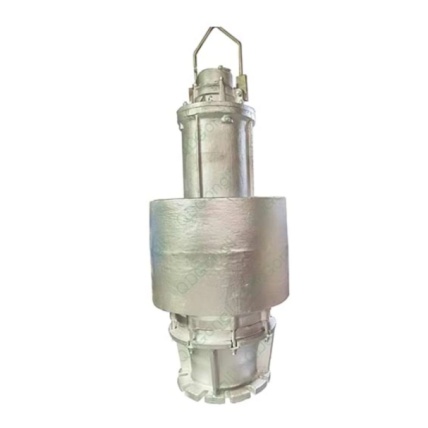
Pump efficiency and motor selection affect long-term cost more than many buyers expect.
Confirm:
efficiency at your duty point
required shaft power
motor size with margin (without being excessively oversized)
expected daily runtime (the longer the runtime, the more efficiency matters)
If the pump runs many hours per day, even small efficiency differences can translate into meaningful operational savings over time.
Your material specification should match both the pumped medium and the site environment—not just your budget level. In real projects, premature pump problems usually come from material mismatch in one or two high-risk zones, such as the wetted casing surface, the impeller leading edge, or the shaft/seal interface. That’s why we recommend thinking in terms of “where will wear or corrosion happen first?” and then upgrading only those critical zones.
Typical considerations include:
Cast iron vs stainless options: Cast iron is widely used for many clean-water and general industrial duties because it is cost-effective and strong. Stainless options are often chosen when corrosion risk is higher or when a cleaner surface and stronger corrosion resistance is needed.
Coated or wear-resistant components for abrasive media: If your medium contains solids or abrasive particles, the first damage often shows up as erosion at the impeller and casing wear ring areas. Coatings or wear-resistant materials can significantly extend service life.
Shaft and impeller material compatibility: The impeller and shaft materials should be selected as a system—especially to prevent uneven wear, deformation under load, or inconsistent performance at the seal region.
Fastener and casing material for corrosive environments: Even if your main wetted components are suitable, fasteners and external casing areas can fail in humid, salty, or chemical atmospheres. Site environment matters, not only the liquid.
Sealing material compatibility with temperature and chemistry: Seal elastomers and seal faces must match operating temperature and chemical exposure. A seal material mismatch can look like a “seal quality problem,” but it is often a specification problem.
Practical takeaway: Material selection is not “upgrade everything to stainless.” It’s about using the right material in the right wear and corrosion zones, so you get reliability without unnecessary cost.
Sealing choice is one of the biggest drivers of long-term reliability. The “best” seal is not always the most expensive—it’s the one that matches your operating reality.
Sealing selection depends on:
medium characteristics (clean vs solids, lubricating vs non-lubricating)
temperature (affects elastomers and seal face stability)
pressure (affects sealing load and heat generation)
leakage allowance (what your site can accept)
maintenance access (how easy replacement is)
Options often include:
Mechanical seals (single, double, cartridge designs depending on duty)
Packing (used in some traditional or lower-cost applications where acceptable)
Seal flush or cooling plans (when heat or solids require additional protection)
Buyer tip: If maintenance access is difficult or downtime is expensive, prioritize seal reliability and choose configurations that allow easy replacement, such as standardized cartridge-style solutions and clear service procedures.
Even a correctly sized pump can perform poorly if installation conditions are wrong. Many “pump quality” complaints are actually piping and layout issues.
Confirm these points early:
Suction piping diameter and layout: Undersized suction lines increase losses and raise cavitation risk.
Straight pipe length before inlet: A stable inlet flow improves performance and reduces vibration.
Air pocket prevention: Avoid high points that trap air and reduce prime stability.
Proper supports: Do not let pipe stress load the casing—this can misalign the pump and shorten seal life.
Alignment and base rigidity: A rigid foundation and correct alignment reduce vibration and bearing wear.
Maintenance access: Plan space for inspection, seal replacement, and routine checks—serviceability protects uptime.
In short, good installation is not “extra work.” It is what allows the pump to deliver the performance you paid for.
Selection item | What to confirm | Why it matters |
Duty point | flow rate + total dynamic head | determines pump curve match |
Medium | temperature, viscosity, solids, corrosion | decides materials + sealing |
NPSH | NPSHa vs NPSHr | prevents cavitation and instability |
Operating range | min/normal/max flow | avoids off-curve operation |
Efficiency | at real duty point | affects operating cost |
Motor sizing | power + margin | prevents overload and overheating |
Materials | casing/impeller/shaft | improves service life |
Seal plan | seal type + flush needs | reduces leakage and failures |
Installation | suction layout and supports | stabilizes performance |
Learning how to choose an Axial Flow Screw Centrifugal Pump becomes straightforward when you follow a structured checklist: define the duty point, understand the medium, confirm NPSH and installation limits, select a pump that operates efficiently across your real working range, and match materials and sealing to the environment. When these factors align, you get stable flow, better energy performance, and fewer maintenance surprises.
To learn more about axial flow screw centrifugal pump configurations and selection support, you’re welcome to contact Qingdao Gongli Technology Co., Ltd. for additional information.
You need required flow rate, total dynamic head, medium details (temperature, viscosity, solids), suction conditions (NPSHa), and installation layout.
Insufficient NPSH can lead to cavitation, vibration, reduced performance, and faster wear of seals and bearings.
Select materials based on corrosion risk, abrasiveness, temperature, and site environment rather than choosing the most expensive option by default.
In many systems, variable speed control is used to match flow demand and improve efficiency, but the pump must be selected to operate stably across the speed range.


