Views: 0 Author: Site Editor Publish Time: 2026-02-25 Origin: Site


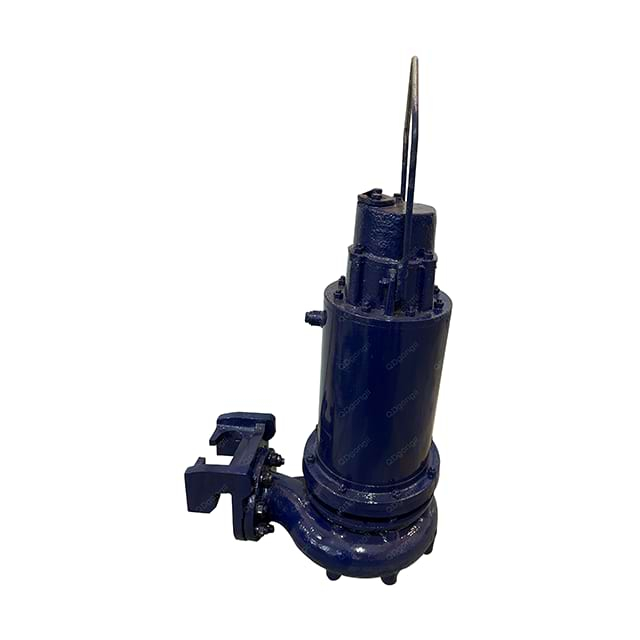
When customers ask us about Submersible Screw Centrifugal Pump applications, the real question is usually: Where does this pump solve problems that standard submersible centrifugal pumps struggle with? In many real job sites—municipal, industrial, and process environments—fluids are not clean. They contain fibrous material, sludge, grit, suspended solids, or they behave more “sticky” than water. In those cases, pumping is not only about achieving flow and head. It’s also about keeping operation stable, avoiding frequent blockages, and maintaining efficiency across changing conditions.
From our experience working with project contractors and plant operators, a submersible screw centrifugal pump is most valued when you need submersible installation + stronger handling for challenging media. It sits between two worlds: the simplicity and high-flow characteristics of centrifugal pumping, and the improved media-handling capabilities associated with screw-style hydraulic designs. The result is a practical solution for tasks like sludge transfer, wastewater with solids, industrial effluent, and applications where consistent performance matters more than textbook “clean water curves.”
In this article, we’ll break down the main applications where a Submersible Screw Centrifugal Pump is commonly selected, what fluid characteristics it is best suited for, and how buyers can match pump selection to their operating conditions. We’ll also include a comparison table to make decision-making easier.
Before we discuss applications, it helps to clarify why this pump type is chosen in the first place. In simple terms, a submersible screw centrifugal pump is designed to:
Operate submerged (in wet wells, sumps, tanks, pits, or process basins)
Handle media containing solids, fibers, and sludge-like characteristics more reliably than many conventional centrifugal designs
Provide stable transfer in situations where clogging risk or unstable flow becomes a daily issue
Different manufacturers may implement the hydraulic concept differently, but the buyer intent is consistent: better reliability with difficult fluids, while keeping a compact submersible footprint.
A good way to understand applications is to start with the fluid profile. A submersible screw centrifugal pump is often considered when you’re dealing with one or more of the following:
Suspended solids (organic or mineral)
Fibrous content (rags, plant fibers, textiles, pulp-like matter)
Sludge or thickened liquids (not necessarily extremely high viscosity, but clearly “heavier” than water)
Grit and abrasives (sand, fine solids in wastewater)
Unstable inflow conditions (variable levels, intermittent surges)
Once these conditions exist, the application list becomes more predictable.
This is one of the most common use cases. Lift stations rarely see clean water. They see wastewater containing solids and fibrous materials that can cause frequent blockages in standard pumps if the system is not well matched.
Why this pump is used here
Improved tolerance for solids and fibrous content
Reduced risk of clogging and emergency callouts
Practical submersible installation for compact stations
Typical tasks
Raw sewage transfer
Pumping from wet well to rising main
Handling variable inflow and level cycling
Within WWTPs, there are multiple points where fluid conditions change: screenings, primary sludge, return activated sludge, thickened sludge transfer, and general plant drainage.
Where it fits best
Sludge transfer where solids content is higher than typical wastewater
Process basins requiring stable pumping performance
Sumps that accumulate mixed solids and debris
Procurement tip
If the pump is expected to run continuously with abrasive or solids-heavy media, buyers should pay attention to wear-resistance strategy (materials, coatings, and operating point).
Industrial wastewater is often harder to predict than municipal sewage. It may contain suspended solids, process residues, and sometimes fibrous waste depending on industry type.
Common industries
Food and beverage processing (washdown water with solids)
Paper, packaging, and pulp-related facilities (fibrous content)
Textile and dyeing facilities (mixed debris)
Chemical and general manufacturing (process pits, sumps, collection tanks)
Why this pump is used here
Better reliability in mixed-fluid conditions
Submersible setup simplifies installation in pits and tanks
Reduced maintenance frequency where downtime is expensive
Drainage projects often involve sand, silt, leaves, and debris. In storm conditions, media is unpredictable and can quickly overwhelm systems designed for clean water.
Typical locations
Underground drainage sumps
Tunnel or construction site dewatering with solids
Flood control pits and low points in industrial parks
Why this pump is used here
Better debris tolerance than standard designs
Useful when you cannot guarantee clean intake conditions
Submersible operation supports temporary or permanent deployment
These environments often introduce abrasive particles that accelerate wear. While no pump is “immune” to abrasion, matching hydraulic design and materials to the job reduces failure risk.
Typical tasks
Pit dewatering with sand and fine solids
Transfer of slurry-like water (low to moderate solids depending on site)
Handling uneven inflows and intermittent operation
Selection note
For abrasive service, the best results come from aligning:
operating point (avoid extreme off-design running)
wear-resistant materials
proper intake screening strategy (where appropriate)
In some agricultural wastewater scenarios, fluid can carry organic solids and fibrous components. Where submersible pumping is preferred (pits, tanks, lagoons, collection sumps), this pump type may be considered.
Common use cases
Collection pits where solids and fibrous content are present
Transfer between storage basins
Drainage and cleanup operations around facilities
Because each agricultural site differs widely, selection should be based on the specific solids profile and operating duty.
Some coastal or shipyard drainage environments include sand, debris, and contaminated water. Submersible installation is often convenient, and solids tolerance can be a deciding factor.
Typical tasks
Dock drainage pits
Equipment area sumps
Stormwater collection with grit
Here is a practical way buyers compare where a Submersible Screw Centrifugal Pump fits best:
Application Area | Typical Fluid Condition | Main Buyer Concern | Why This Pump Is Considered |
Municipal lift stations | Raw sewage, solids, fibrous material | Clogging risk, reliability | Better solids tolerance, stable operation |
WWTP sludge zones | Higher solids, sludge-like media | Wear and continuity | More stable handling of heavier media |
Industrial effluent | Mixed residues, variable solids | Downtime cost, unpredictability | Reliable submersible transfer in tough conditions |
Stormwater & drainage | Debris, sand, silt | Blockage during surges | Better debris tolerance under variable inflow |
Mining & construction | Abrasive grit, dirty water | Rapid wear | Material + hydraulic matching helps reduce failures |
Agricultural pits | Organic solids, fibrous content | Consistent pumping without frequent stoppage | Handles “dirty” fluid profiles more reliably |
Even within the same application category, site conditions can vary. When we support customers, we usually ask for a few practical inputs so the recommended configuration matches reality:
Medium description
Is it wastewater, sludge, drainage water, process effluent? What solids/fibers are expected?
Duty requirement
Continuous running, intermittent, or emergency-only?
Flow and head target
Required capacity and discharge head, including pipeline losses.
Solids and debris risk
Maximum solids size expectations and whether fibrous material is present.
Installation environment
Wet well depth, guide rail needs, space constraints, power supply, control requirements.
Maintenance expectations
Is site access easy or difficult? What is the acceptable service interval?
These questions don’t complicate purchasing—they reduce lifecycle cost by preventing under-spec or mismatch.
So, what are the main applications of a Submersible Screw Centrifugal Pump? In our experience, it’s most commonly selected for municipal wastewater lift stations, wastewater treatment processes (including sludge transfer), industrial effluent with solids, stormwater and drainage with debris, and dewatering projects where grit or unpredictable intake conditions are part of daily reality. The core reason is consistent: this pump type is chosen when reliability with challenging media is more important than simply moving clean water from point A to point B.
At Qingdao Gongli Technology Co., Ltd., we support customers who need practical pumping solutions for demanding sites—helping match pump configuration to media characteristics, duty cycles, and installation constraints. If you are evaluating a Submersible Screw Centrifugal Pump for a wastewater, sludge, drainage, or industrial project, you can learn more through Qingdao Gongli Technology Co., Ltd. Our team can share product information and selection guidance based on your target flow/head and real fluid conditions, so your project runs smoothly with fewer stoppages.
They are commonly used in municipal wastewater lift stations, WWTP sludge areas, industrial effluent transfer, stormwater/drainage with debris, and abrasive dewatering scenarios.
It is often selected for sludge-like or solids-containing media where standard submersible centrifugal pumps may clog or run unstably, provided the pump is properly matched to solids content and duty.
Many buyers consider it specifically for fibrous and solids-laden wastewater because improved media handling can reduce clogging events compared with more conventional designs.
Provide the medium description, solids/fiber presence, target flow and head, duty cycle, installation depth/layout, and any abrasive or debris risks to ensure the recommendation matches real conditions.