Views: 0 Author: Site Editor Publish Time: 2026-01-28 Origin: Site


A Screw Centrifugal Pump often runs quietly until heat becomes a problem.Temperature limits decide reliability, efficiency, and service life.In this article, you will learn how operating temperature affects a Screw Centrifugal Pump and what really defines its safe working range.
A Screw Centrifugal Pump is a hybrid pumping solution that combines axial screw conveying and centrifugal force in one structure. It guides fluid forward through a spiral impeller while gradually increasing pressure. This approach avoids sudden acceleration and sharp directional changes inside the pump. The result is smoother hydraulic behavior during continuous operation. It fits industrial systems where flow stability and predictable performance matter more than short-term peak output. In real operation, the design naturally delivers several advantages:
● Fluid enters the pump in an axial direction, which helps avoid inlet shock.
● Pressure builds up progressively rather than abruptly.
● Internal turbulence remains lower than in conventional centrifugal pumps.
● Long operating cycles stay stable even under fluctuating load conditions.
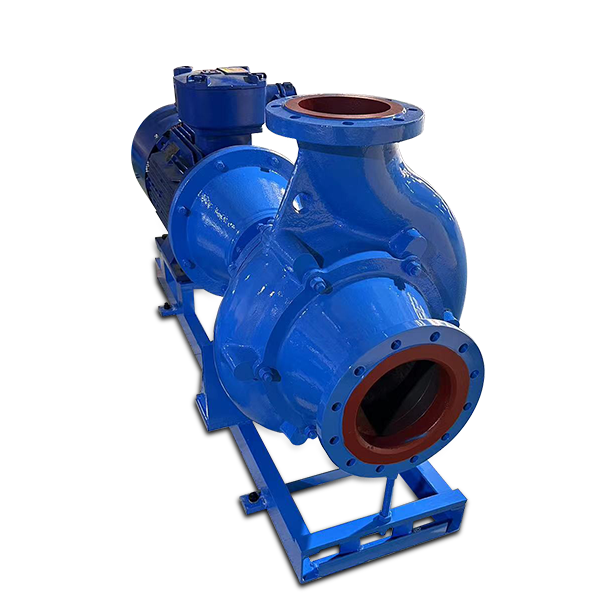
The spiral impeller defines how a Screw Centrifugal Pump behaves under real working conditions. Its geometry guides the medium along a controlled path instead of forcing rapid flow changes. This reduces shear stress and keeps velocity distribution more uniform. Lower turbulence also means less localized heat generation inside the casing. Over time, this contributes to steadier internal temperatures and reduced mechanical fatigue. From the user’s point of view, the impeller design naturally supports:
● More consistent flow when solids or fibers are present.
● Lower vibration levels during continuous operation.
● Reduced internal wear caused by unstable flow patterns.
● Better thermal balance across rotating components.
Screw Centrifugal Pumps are widely used in applications where fluid conditions are complex rather than clean and uniform. They perform well when media contains solids, fibers, or exhibits higher viscosity. Common use cases include wastewater transport, sludge circulation, industrial process water, and similar continuous-duty systems. Pumps developed by Qingdao Gongli Technology Co., Ltd. focus on durability and long service life, which aligns well with industrial environments where stable temperature behavior and low downtime are critical.
Operating temperature directly influences how internal components behave over time. As temperature rises, materials expand and lubrication characteristics change. These effects alter internal clearances and contact pressure between moving parts. When temperature remains within the designed range, components stay aligned and wear progresses slowly. Once it exceeds that range, mechanical stress increases and reliability drops. In practice, temperature affects reliability through several connected mechanisms:
● Thermal expansion can disturb shaft alignment.
● Lubrication viscosity decreases as heat increases.
● Friction rises at seal and bearing interfaces.
● Component tolerances become harder to maintain.
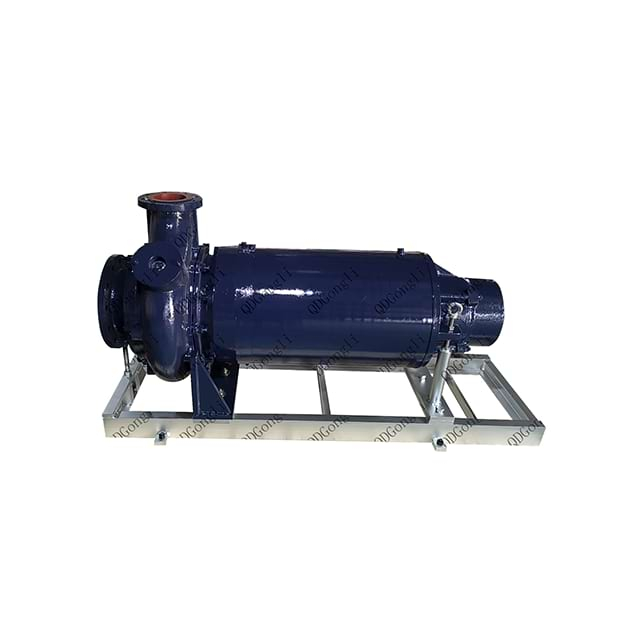
Seals, bearings, and motors are the most temperature-sensitive elements in a pump system. Mechanical seals depend on a thin fluid film to control heat and friction. Excessive temperature breaks this balance and increases leakage risk. Bearings face faster wear when lubrication thins under heat. Motor insulation also degrades more quickly as temperature rises, reducing electrical reliability. Keeping temperature under control helps operators:
● Maintain seal integrity and reduce leakage events.
● Extend bearing service life and reduce vibration.
● Protect motor insulation from premature aging.
● Avoid unexpected shutdowns caused by thermal damage.
Temperature has a direct effect on efficiency and maintenance planning. Higher internal losses appear when components operate outside their optimal thermal range. Energy consumption rises while output remains unchanged. Maintenance intervals shorten because seals and bearings require earlier replacement. Over time, temperature limits quietly shape total operating cost rather than just pump lifespan.
Maximum operating temperature refers to the highest fluid temperature a pump can handle during continuous, stable operation. It assumes proper installation, normal pressure conditions, and adequate lubrication. It does not describe short exposure or emergency scenarios. Running close to this limit requires consistent monitoring because heat accumulates gradually inside the pump. Repeated operation beyond this point increases long-term risk even if immediate failure does not occur.
Short temperature spikes and continuous exposure have very different effects on a Screw Centrifugal Pump. A brief temperature rise may not cause visible damage. Continuous exposure, however, allows heat to build up in seals, bearings, and the motor. For this reason, continuous operating limits are set more conservatively. Stable medium-temperature operation usually delivers the best balance between efficiency, reliability, and service life.
The practical temperature range of a Screw Centrifugal Pump is determined by several interconnected design elements. Each one contributes to how heat is generated, transferred, and dissipated during operation.
Design Aspect | Influence on Temperature Limit | Practical Impact |
Impeller and casing material | Determines thermal expansion tolerance | Affects clearance stability and wear |
Mechanical seal structure | Controls heat dissipation at the shaft | Limits leakage at higher temperature |
Bearing and lubrication system | Sets safe operating heat range | Influences vibration and service life |
Motor insulation and cooling | Protects electrical components | Defines long-term operational reliability |
Understanding how these elements interact helps users interpret temperature ratings more realistically. It explains why most standard Screw Centrifugal Pumps are optimized for stable, medium-temperature operation rather than extreme heat conditions.
Screw Centrifugal Pumps from Qingdao Gongli Technology are designed around stable, medium-temperature industrial operation. Each pump structure manages heat differently, depending on installation mode and cooling conditions. Temperature ratings are defined for continuous duty rather than short exposure. This helps users predict long-term reliability instead of focusing only on peak limits. Across the product range, temperature capability reflects practical engineering priorities:
● Continuous operation stability comes first.
● Internal heat buildup stays controlled through structure and flow design.
● Seal and bearing life remain predictable under rated conditions.
● Motor protection aligns with real industrial duty cycles.
Pump Structure | Typical Thermal Behavior | Temperature Control Logic |
Submersible type | Heat absorbed by surrounding liquid | Natural liquid cooling |
Dry-installed type | Heat released through air and oil systems | Assisted cooling design |
Axial-flow type | Reduced internal friction | Lower heat generation |
Coupling type | Balanced load and rotation | Stable mechanical temperature |
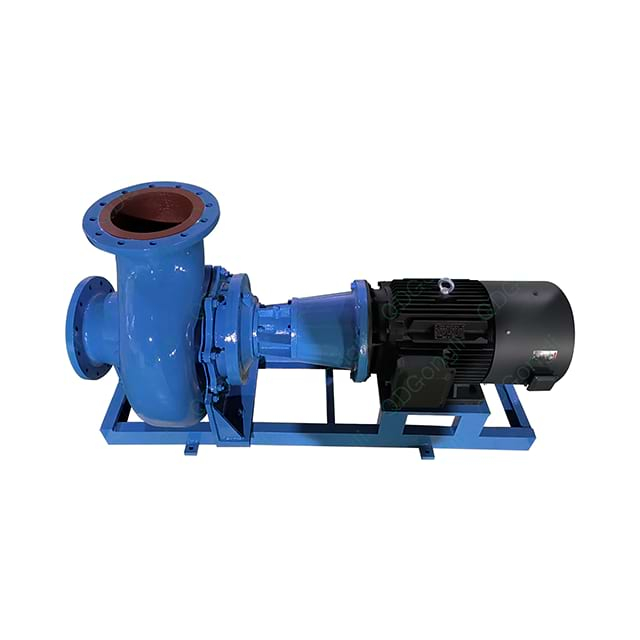
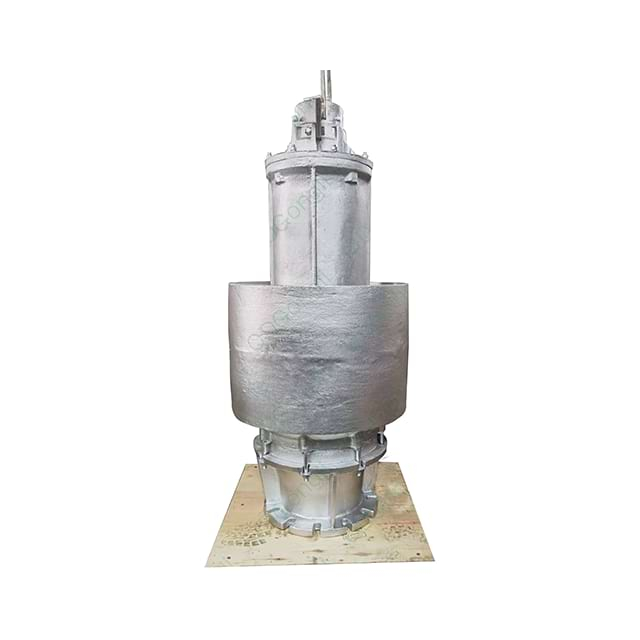
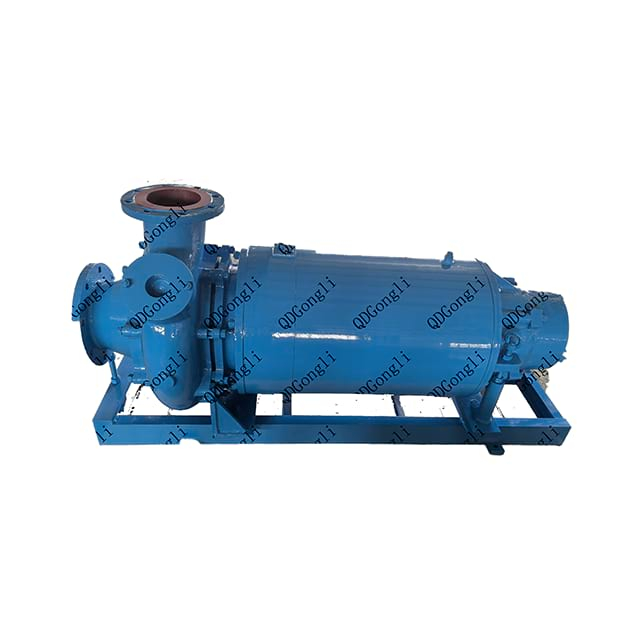
Submersible Screw Centrifugal Pumps operate fully immersed in liquid, which naturally absorbs heat generated by rotation and friction. This environment helps stabilize temperature even during extended operation. Thermal fluctuations remain moderate because the surrounding fluid acts as a heat buffer. Dry-installed Screw Centrifugal Pumps rely on air circulation and oil cooling to manage heat. Their design focuses on controlled airflow paths and effective heat dissipation. This structure suits installations where immersion is not possible but thermal balance still matters. In both cases, the goal remains consistent temperature behavior rather than pushing extreme limits.
Axial-flow Screw Centrifugal Pumps benefit from smooth axial fluid movement, which reduces internal turbulence and friction. Lower friction means less heat generation during operation. Coupling Screw Centrifugal Pumps focus on balanced power transmission and stable shaft alignment. This reduces localized heating at bearings and seals. Together, these designs support reliable operation by:
● Lowering friction-related heat sources.
● Keeping seal contact pressure stable.
● Reducing vibration-induced temperature rise.
● Supporting predictable thermal behavior under load.
The pump casing and wetted materials define the foundation of temperature tolerance. As temperature rises, materials expand and react differently to stress. Proper material selection helps maintain internal clearances and structural stability. Mechanical seals play a central role here. Their material compatibility determines how well friction heat dissipates during rotation. In practice, temperature resistance depends on:
● Casing material stability under thermal expansion.
● Seal face material resistance to heat and wear.
● Ability to maintain a cooling fluid film at the shaft.
● Consistent sealing pressure during long operation.
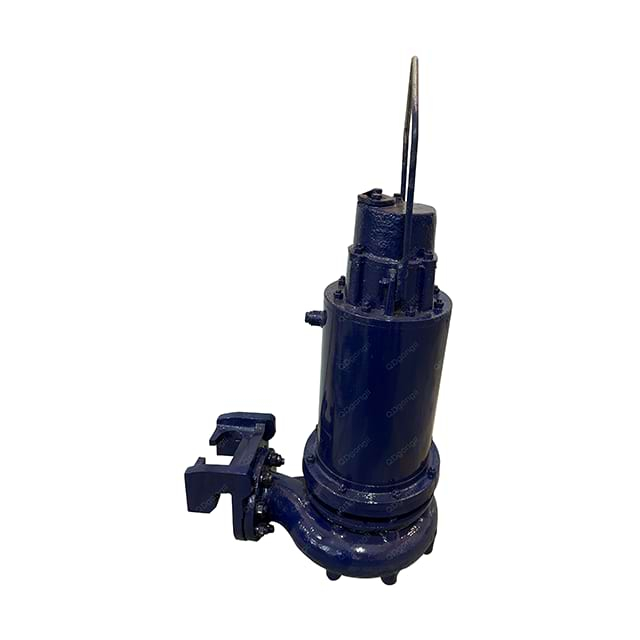
Bearings and lubrication systems respond quickly to temperature changes. Higher temperature lowers lubricant viscosity, which increases wear and vibration. Bearing design and lubrication method must match the expected thermal load. Motor insulation also reacts to heat over time. Sustained high temperature shortens insulation life and affects electrical reliability. Temperature-sensitive components usually show stress through:
● Rising vibration levels.
● Increased bearing noise.
● Higher power consumption.
● Reduced motor insulation lifespan.
Maximum operating temperature is never defined by one component alone. It results from how casing, seals, bearings, and motor systems work together. Integrated design ensures heat flows away from sensitive areas instead of accumulating. Manufacturing precision also matters. Tighter tolerances help control friction and heat generation during operation. The relationship between design quality and temperature stability appears clearly below.
Design Factor | Role in Temperature Control | Operational Effect |
Integrated structure | Distributes heat evenly | Avoids local overheating |
Precision manufacturing | Reduces friction losses | Lowers internal heat |
Cooling path design | Guides heat dissipation | Protects seals and bearings |
Quality control | Ensures consistent tolerances | Stable long-term temperature |
When a Screw Centrifugal Pump runs above its rated temperature, damage rarely appears all at once. It develops step by step as heat affects the most sensitive parts first. Mechanical seals lose cooling balance and start to leak. Bearings face thinner lubrication and higher friction. Over time, these changes reduce stability and increase downtime risk. In daily operation, overheating often leads to:
● Seal faces drying out and losing surface integrity.
● Bearings generating abnormal noise due to accelerated wear.
● Lubricants breaking down faster under sustained heat.
● Motors drawing higher current as efficiency drops.
Heat causes metal components to expand at different rates. Inside a Screw Centrifugal Pump, this changes internal clearances and shaft alignment. Even small deviations increase contact pressure between rotating parts. Once alignment shifts, friction rises and heat builds even faster. This cycle continues until performance drops or components fail. Operators usually notice early signs such as:
● Increased vibration during steady operation.
● Slight rubbing sounds near bearings or seals.
● Gradual loss of flow consistency.
● Higher casing surface temperature than normal.
Operating above the temperature limit also affects efficiency. Internal losses increase while output remains similar. Power consumption rises, yet flow stability declines. Maintenance intervals shorten because seals and bearings reach their wear limits sooner. Over long periods, excessive temperature shortens overall pump service life and raises operating cost. The table below shows how temperature stress translates into performance issues.
Temperature Effect | Internal Impact | Operational Result |
Excess heat | Seal film instability | Increased leakage |
Thermal expansion | Clearance reduction | Higher friction |
Lubricant thinning | Bearing wear | More vibration |
Motor overheating | Insulation aging | Reduced reliability |
Choosing the right Screw Centrifugal Pump begins by understanding real operating conditions. Fluid temperature during continuous operation matters more than occasional peaks. Duty cycle defines how long heat stays inside the system. Pumps selected only by flow and head often struggle later when temperature effects appear. A clear evaluation usually includes:
● Normal operating temperature, not startup temperature.
● Expected temperature variation during a full cycle.
● Continuous or intermittent operation pattern.
● Ambient temperature around the installation site.
Pump structure plays a major role in temperature behavior. Submersible, dry-installed, axial-flow, and coupling designs manage heat differently. Material choice also matters. Casing materials, seal faces, and bearing systems must tolerate the expected thermal load. Matching these elements to real conditions helps avoid unnecessary stress and premature wear. In practical selection, users often focus on:
● Pump structure suited to cooling conditions.
● Seal materials compatible with fluid temperature.
● Bearing systems designed for thermal stability.
● Motor insulation rated for long-term heat exposure.
Datasheet limits define safe operating boundaries. Relying on assumptions or short-term tolerance often leads to long-term problems. When operating temperature approaches the upper limit, it makes sense to consult the manufacturer early. Engineers at Qingdao Gongli Technology Co., Ltd. typically evaluate temperature, materials, and duty cycle together. This approach helps identify whether a standard model fits or if a temperature-resistant configuration is more appropriate.
A: A Screw Centrifugal Pump operates within rated limits defined by seals, bearings, and materials for continuous duty.
A: High temperature accelerates seal wear, bearing damage, and efficiency loss in a Screw Centrifugal Pump.
A: Check datasheet limits, duty cycle, and material suitability before selecting a Screw Centrifugal Pump.
A: Overheating causes leakage, vibration, misalignment, and shortens Screw Centrifugal Pump service life.
A: Contact Qingdao Gongli Technology Co., Ltd. when operating temperature approaches design limits.