Views: 0 Author: Site Editor Publish Time: 2026-03-10 Origin: Site


In fluid handling industries, efficiency is rarely defined by a single metric. It is a balance between energy consumption, reliability, clog-resistance, maintenance frequency, and the ability to handle difficult media. At Qingdao Gongli Technology Co., Ltd., we often work with customers who are dealing with wastewater, sludge, viscous liquids, or solids-laden fluids where traditional centrifugal pumps struggle. In these scenarios, Screw Centrifugal Pumps provide a practical and highly efficient solution.
Rather than relying solely on high rotational speed to move liquid, this pump design combines the advantages of a screw impeller with centrifugal force, allowing smooth flow, reduced turbulence, and excellent solids handling. Understanding how screw centrifugal pumps work efficiently helps engineers choose the right equipment, optimize system design, and reduce long-term operating costs.
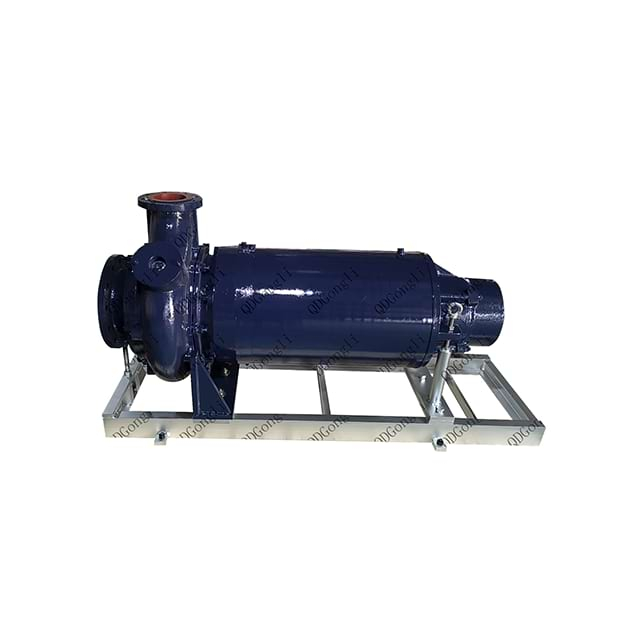
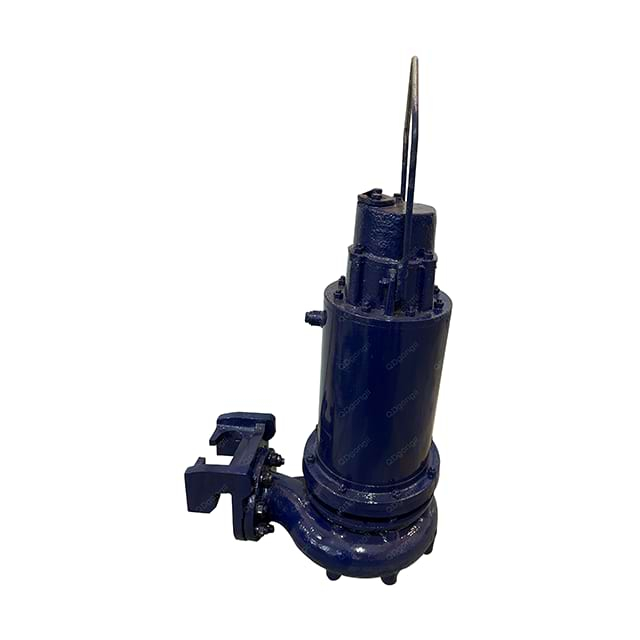
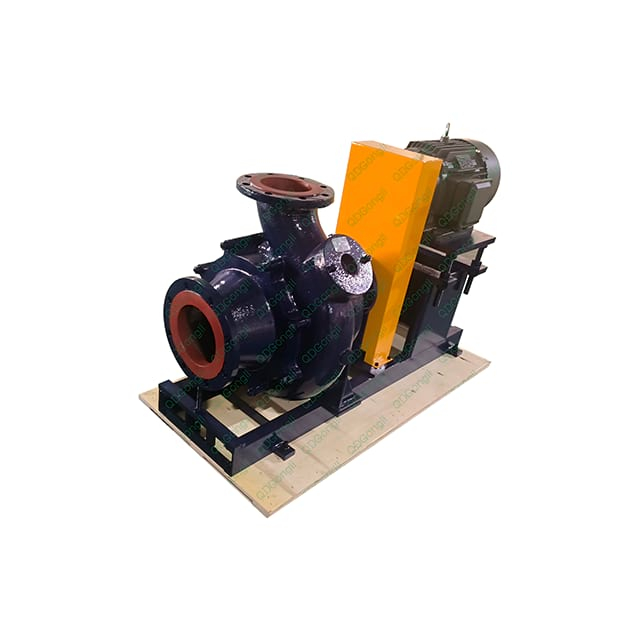
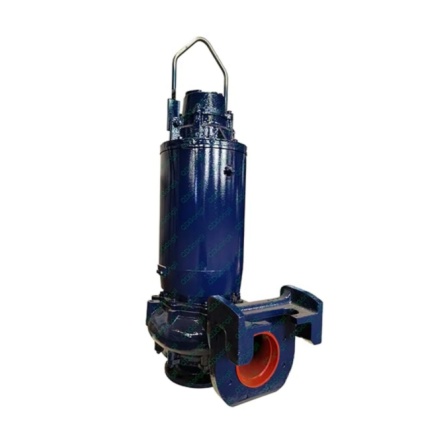
A screw centrifugal pump is a hybrid pump that integrates a single-blade screw-type impeller with centrifugal pump principles. The impeller looks like a spiral screw extending into the suction area.
This geometry creates a gentle conveying action before centrifugal acceleration occurs.
Open channel flow design
Large free passage for solids
Low shear liquid transport
Reduced clogging risk
Stable hydraulic performance
Unlike conventional multi-blade centrifugal pumps, the screw impeller guides fluid progressively, making it ideal for sensitive or complex media.
The working principle of a Screw Centrifugal Pump can be understood in three main stages, each contributing to its overall efficiency and reliability when handling complex fluids.
1. Smooth Intake (Screw Action)
At the inlet, the screw-shaped leading edge of the impeller gently pulls fluid into the pump. Unlike traditional centrifugal pumps that rely on rapid acceleration immediately at the suction, this progressive intake minimizes turbulence and reduces suction losses. As a result, the pump performs better when handling fluids containing solids, fibers, or air bubbles. Improved suction behavior also lowers the risk of cavitation, which directly supports long-term efficiency.
2. Progressive Conveying
After entering the pump, the fluid travels along the spiral channel formed by the screw impeller. This stage is crucial because it maintains momentum while avoiding sudden changes in flow direction. The progressive conveying effect allows large particles to move smoothly through the pump without impact or blockage. In applications such as wastewater, sludge transport, and food processing, this gentle movement reduces shear, protects product integrity, and minimizes internal wear.
3. Centrifugal Acceleration
Once the fluid reaches the main impeller body, centrifugal force converts rotational energy into pressure and flow. This stage functions similarly to a conventional centrifugal pump but benefits from the stabilized flow created by the screw section. Because the fluid enters the centrifugal zone in a controlled manner, energy conversion becomes more efficient and hydraulic losses are reduced.
This combination of screw conveying and centrifugal acceleration explains why screw centrifugal pumps maintain high efficiency even when handling challenging media such as solids-laden wastewater, fibrous sludge, or viscous liquids.
Efficiency is often associated with energy consumption, but in practical operations it has a broader meaning. For most industrial users, true efficiency includes reliability and lifecycle performance.
Key efficiency outcomes include:
Reduced downtime caused by clogging
Stable flow under variable operating conditions
Lower wear rates due to gentle hydraulic design
Longer maintenance intervals
Predictable and consistent performance
In wastewater plants or industrial sludge transport systems, these operational benefits frequently outweigh small differences in peak hydraulic efficiency. A pump that avoids blockages and maintains stable output ultimately delivers better overall system efficiency.
The single-blade screw impeller is the defining feature of this pump type. Its open structure minimizes hydraulic losses and allows large solids to pass freely, reducing the likelihood of obstruction.
Another important characteristic is the oversized flow channel, which enables reliable solids transport.
Feature | Traditional Centrifugal Pump | Screw Centrifugal Pump |
Solids handling | Limited | Excellent |
Clogging risk | Medium–High | Low |
Shear level | Higher | Lower |
Flow stability | Moderate | High |
An optimized volute gradually converts velocity into pressure. This controlled energy transformation supports stable performance and helps maintain efficiency across a wider operating range.
It is important to distinguish between two types of efficiency.
Hydraulic efficiency measures how effectively the pump converts input energy into fluid movement.
Operational efficiency reflects real-world performance over time.
Screw centrifugal pumps often excel in operational efficiency because they deliver:
Less blockage
Fewer shutdowns
Lower maintenance costs
Consistent long-term performance
For municipal infrastructure and industrial processing environments, this operational reliability is a major reason why screw centrifugal pump technology is increasingly adopted.
Energy savings come from multiple mechanisms:
Smooth flow paths lower hydraulic losses.
The pump performs well across varying flow conditions, reducing off-design losses.
Open channel design prevents internal flow disturbance.
Improved suction behavior reduces cavitation risk.
Screw centrifugal pumps are widely used where media is complex.
Transport of raw sewage with solids and fibers.
Paper mills, food processing, chemical plants.
Manure handling and irrigation with debris.
Large volume pumping with debris tolerance.
Industry | Efficiency Benefit |
Wastewater | Anti-clogging stability |
Food processing | Gentle product handling |
Pulp & paper | Fiber transport |
Biogas | Slurry reliability |
Viscosity, solids size, fiber content.
Incorrect sizing is the most common cause of inefficiency.
Pipe layout, suction design, system resistance.
Running far from the best efficiency point reduces performance.
At Qingdao Gongli Technology Co., Ltd., we typically recommend evaluating:
Solids size and concentration
Required flow and head range
Continuous vs intermittent operation
Wear environment
Maintenance expectations
Correct selection ensures long-term efficiency rather than short-term performance.
Efficiency declines when wear increases or flow paths degrade.
Periodic inspection of impeller clearance
Monitoring vibration and power consumption
Checking sealing system condition
Cleaning accumulated debris when necessary
Preventive maintenance keeps hydraulic performance stable.
Pump Type | Strength | Limitation |
Standard centrifugal | Simple, low cost | Clogging risk |
Progressive cavity | High viscosity handling | Sensitive to dry run |
Screw centrifugal | Balanced performance | Higher initial cost |
The screw centrifugal pump often provides the best compromise between robustness and efficiency.
Not necessarily. Real efficiency depends on application conditions.
The design is suitable for many industries.
In clog-prone systems, savings from reduced downtime can be significant.
Industry development is focusing on:
CFD-optimized impeller geometry
Wear-resistant materials
Smart monitoring
Variable speed optimization
Digital performance diagnostics
These trends improve both hydraulic and lifecycle efficiency.
A wastewater plant replacing standard pumps often sees:
Fewer blockages
Lower maintenance hours
More stable flow
Reduced emergency shutdowns
Even if nominal efficiency is similar, operational efficiency improves significantly.
Efficiency is a system result.
Important considerations include:
Suction pipe design
Valve configuration
Control strategy
Speed control
Redundancy planning
A well-matched system maximizes screw centrifugal pump advantages.
From our experience, customers rarely struggle with the concept of screw centrifugal pumps — they struggle with selection and integration. The most efficient pump is the one matched correctly to the application.
We focus on understanding media behavior first, then defining hydraulic requirements, and finally selecting impeller configuration, materials, and operating range. This approach consistently delivers better lifecycle efficiency rather than short-term gains.
Efficiency in fluid transport is ultimately about reliability, stability, and lifecycle performance. Screw Centrifugal Pumps achieve efficiency by combining smooth screw conveying with centrifugal energy conversion, enabling gentle handling, strong solids tolerance, and stable operation across demanding conditions.
In real industrial environments, this means fewer blockages, reduced maintenance, predictable energy consumption, and improved operational continuity. That is why screw centrifugal pumps are increasingly chosen for wastewater, sludge, industrial processing, and other complex fluid applications.
At Qingdao Gongli Technology Co., Ltd., we focus on helping customers achieve practical efficiency — not just theoretical numbers. By matching pump design with real operating conditions, providing engineering support, and optimizing system integration, we aim to deliver solutions that perform reliably over the long term. If you are evaluating pump options for difficult media or looking to improve system efficiency, learning more about screw centrifugal pump solutions and discussing your application with our team can be a useful next step.
1. What makes a Screw Centrifugal Pump more efficient for solids handling?
The large free passage and screw impeller reduce clogging and turbulence, maintaining stable flow and lowering downtime.
2. Are Screw Centrifugal Pumps energy efficient compared with standard centrifugal pumps?
Yes, especially in clog-prone applications where stable operation prevents energy waste and repeated restarts.
3. Can Screw Centrifugal Pumps handle viscous fluids efficiently?
They handle moderate viscosity well because of progressive conveying and low shear flow.
4. How do I select the right Screw Centrifugal Pump for efficiency?
Evaluate media characteristics, required flow and head, solids content, operating pattern, and maintenance expectations.